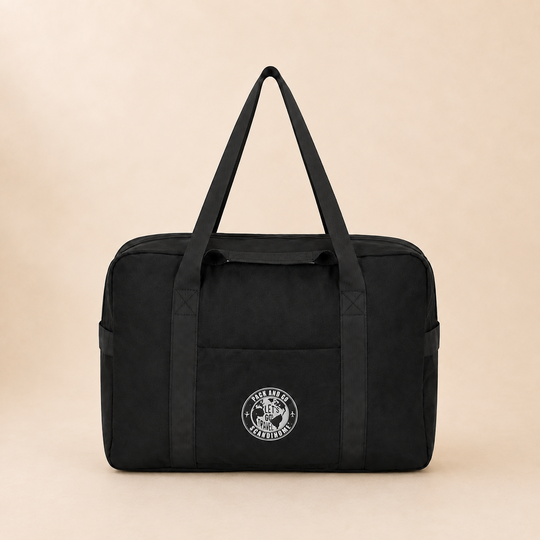
Compression packing bags can reduce the space taken up by soft clothing, but they do not reduce its weight. The best result comes from choosing the right items, removing air gradually and leaving enough room for the bag to close without strain.
Compression bags or ordinary packing organizers: which should you choose?
Choose by the job you want the bag to do. Releasing air from soft clothing and separating small belongings are different tasks; one packing routine can use both.
| Format | How it works | What one purchase includes |
|---|---|---|
| OEM-2354 pump-free compression bag | A roll-top buckle closure and one-way air valve let you press excess air out of dry clothing by hand. No pump is needed. | One bag in the selected size and colour. M and L are separate choices. |
| PT-2405 seven-piece organizer set | Six zippered pieces and one drawstring bag separate categories of belongings. They do not use air-valve compression. | Seven pieces in the selected colour, one of each listed size. |
| LITESTOW four-piece zipper set | Four zipper organizers group small accessories, toiletries or clothing. They do not compress through an air valve. | One S, one M, one L and one XL organizer in the same colour. |
If your priority is bulky soft clothing, compare the compression bag sizes and allow room to roll the top closed. If your priority is finding things quickly, begin with separate organizers. Neither choice reduces the weight of your belongings.
How to choose pieces from the seven-piece set
PT-2405 includes the following seven sizes. These are suggested uses, not guaranteed garment counts or a promise that all seven will fit every suitcase. Three measurements describe width × height × depth; two describe width × height.
| Piece | Approximate size | Suggested starting use |
|---|---|---|
| Small clothing organizer | 21 × 15.5 × 8 cm | Underwear |
| Accessory organizer | 30 × 15 × 9 cm | Accessories |
| Medium clothing organizer | 32 × 21.5 × 9 cm | T-shirts or trousers |
| Large clothing organizer | 40 × 30 × 11 cm | Bulkier clothing |
| Small flat pouch | 21 × 15 cm | Cables and small items |
| Large flat pouch | 30 × 22 cm | Socks or slim items |
| Drawstring bag | 30 × 35 cm | Separating shoes |
Measure the usable inside space of your luggage, including the space taken by wheels and handle housings. Start with the clothing pieces, then place smaller pouches where they fit. Allow for the thickness of your packed items and keep the closures free of strain. You can leave unneeded pieces at home.
What to pack in compression bags
Start with flexible textiles such as T-shirts, underwear, knitwear and casual trousers. Fold or roll each item before placing it in the bag so the load stays even. Keep rigid objects, sharp accessories and items that crease easily in another organizer.
Step 1: Sort by use
Group clothes by day, person or category. A simple setup might use one bag for tops, one for bottoms and one for sleepwear. This makes it easier to find an item without opening every bag.
Step 2: Leave room around the closure
For the OEM-2354 roll-top bag, leave enough space above the clothing to roll the top and fasten the buckle securely. If the closure feels strained, remove an item. Other compression designs may use different closures; follow the instructions for your own bag.
Step 3: Remove air gradually
With the OEM-2354 top rolled and buckle fastened, press gently to release excess air through the one-way valve. No pump or electricity is needed. Stop and repack if the closure feels strained. The amount of compression depends on the clothing and the way it is packed.
Step 4: Pack the suitcase by weight
Place heavier compressed bags near the wheel end of a rolling suitcase. Use lighter organizers around them to reduce shifting. Check the total luggage weight after packing because compressed clothing can make it easy to add more than the airline allowance.
Common mistakes to avoid
- Do not use compression as a substitute for checking baggage weight.
- Do not pack damp clothing; allow everything to dry first.
- Do not place sharp buckles or exposed zippers against the bag material.
- Do not leave highly compressed garments stored for long periods.
Before you travel
Test the packed layout at home, confirm the closures stay secure and keep one frequently used layer outside the compressed bags. Browse the Scandihome travel essentials collection for organizers designed to separate clothing and small accessories.
For this packing method, see the ScandiHome pump-free compression bag with a one-way air valve. Each colour and size selection is one bag. For sorting without air-valve compression, compare the seven-piece packing organiser set.